

What to See at Sunnyvale Heritage Park Museum
Sunnyvale Heritage Park Museum offers a look at the city and Santa Clara Valley through family history, agriculture, industry, and technology. Three rooms are arranged to resemble the Murphy family’s original house around 1860: a parlor and dining room, a kitchen, and a bedroom.
Exhibits include cannery tools, items from Hendy Iron Works, and a display about the Naval Air Station that later became Moffett Field. A downstairs mural traces the Santa Clara Valley’s history from the Ohlone to the 1950s and the arrival of technology associated with Silicon Valley.
Upstairs, a Tech Wall follows technology developments in Silicon Valley and Sunnyvale. The second floor also has a room for rotating exhibits, which change every two or three months, and a meeting room used for Speaker Nights and Victorian Teas.
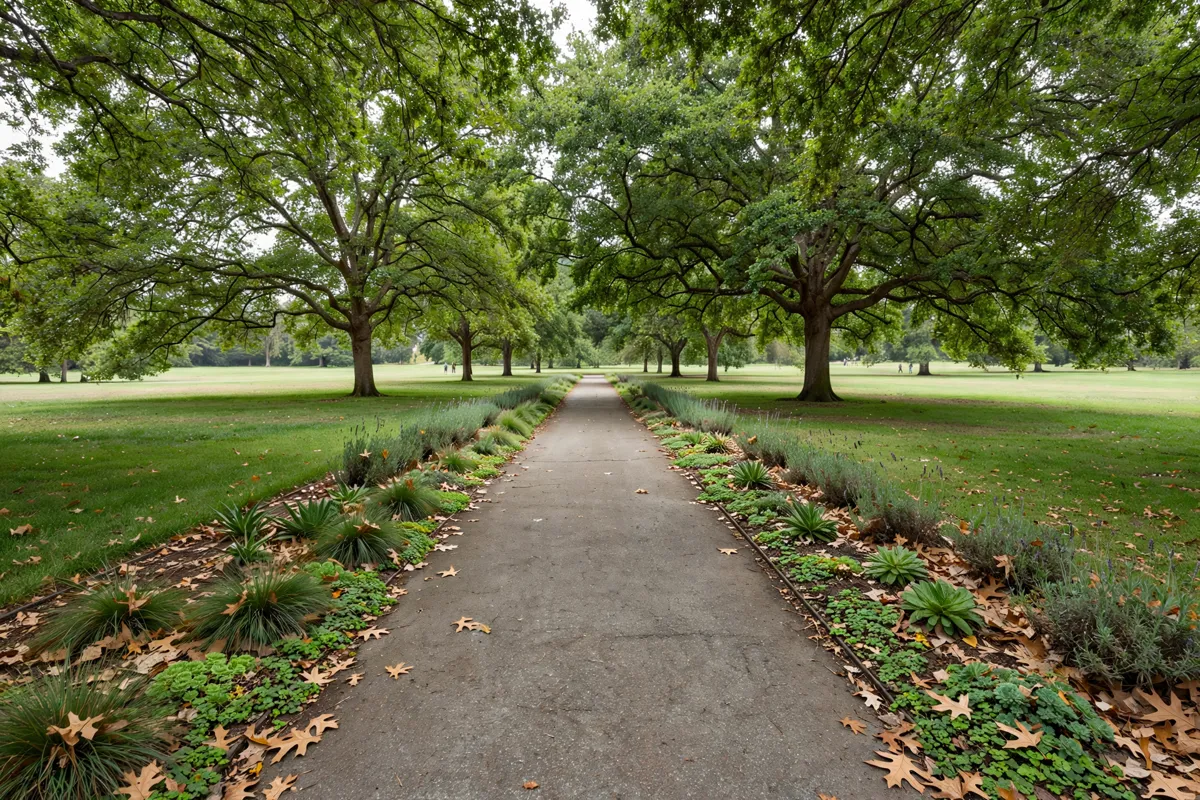
The Museum Grounds and Historic Buildings
The museum building is a replica of the Murphy ranch house known as “Bay View.” The original house stood at the present site of Murphy Park, near Sunnyvale and California avenues. The Murphy family is described by the museum as part of the first wagon train to successfully bring wagons across the Sierra Nevada, in 1845.
The original Bay View house was sold to the City of Sunnyvale in 1951, designated a historical landmark in 1960, and demolished in 1961 for construction of Central Expressway. The Sunnyvale Historical Society was founded in 1956 with the stated mission of saving the house. The current museum building was built in 2008.
Next to the museum, the Orchard Heritage Park Interpretive Exhibit shares the story of orchard workers and fruit cultivation and canning in the first half of the 20th century. Early cultivators and ranching equipment are also presented nearby.
The City of Sunnyvale preserved 10 acres of Blenheim apricot trees in 1994, and the Historical Society designated the orchard Heritage Orchard Park in 1997. The orchard has about 80 trees per acre, or approximately 800 trees in total; the interpretive exhibit was built in 2001.
A sidewalk loops around the orchard. Stay on it rather than walking among the trees: it is a working orchard with farm machinery and implements. The inside of the Bianchi Barn is closed to the public.
Hours, Admission, and Visitor Access
The museum is open year-round on Sundays, Tuesdays, and Thursdays from 12 p.m. to 4 p.m. Admission and parking are free, and the museum says it is wheelchair accessible. It does not sell food, and food and drink are not allowed inside. There is an outdoor picnic area.
The Orchard Heritage Park Interpretive Exhibit is open to the public every day from dawn to dusk, so you can visit the outdoor exhibit outside the museum’s opening hours.
Before you go, check the official site for the museum’s calendar and current visitor information; the museum advises checking for holiday closures and special public or private events. If you plan to eat during your visit, use the outdoor picnic area.
Getting to the Museum from Sunnyvale
The museum is at 570 E Remington Drive, Sunnyvale, CA 94087, about a 7-minute drive from Cherry Orchard Inn. If you are walking, the trip takes about 33 minutes. Follow signs from the driveway off Manet Drive when you arrive. For questions, call (408) 749-0220.
Pairing a Museum Visit with Other Local Stops
Pair the museum’s indoor exhibits with a walk around the Heritage Park Apricot Tree Orchard and a stop at its outdoor interpretive exhibit.
You can follow the sidewalk loop to see the working landscape, then read about the people and equipment behind local fruit growing and canning. Keep to the sidewalk around the trees, and plan food or drinks for the outdoor picnic area rather than inside the museum.